Posts

The Lodger (1927)

Image
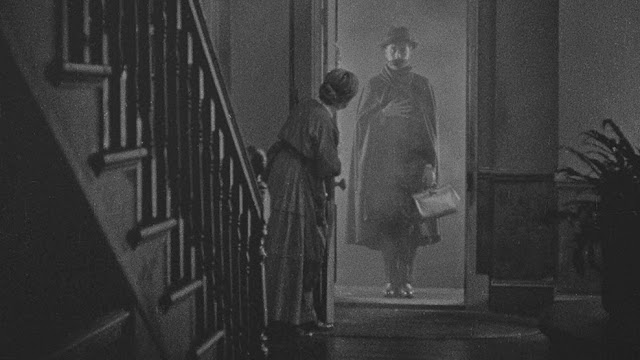
  Alfred Hitchcock's "The Lodger" For over 60 years, Alfred Hitchcock directed some of the most iconic films ever put to screen. He is often considered one of the greatest filmmakers of all time. He is especially known for his 'thriller' genre. The film that not only started this string of thriller genre films, but also Hitchcock as a reputable director, was 1927's " The Lodger ." This silent film is based on a 1913 novel of the same name by Marie Belloc Lowndes and concerns a serial killer loose in London.  The serial killer at the heart of the film is based on the real London killer, Jack the Ripper. As this killer murders women late at night in the streets of London, a new, mysterious man takes lodging at the Bunting house. Mr. and Mrs. Bunting begin to grow suspicious of this new lodger after he starts becoming familiar with their daughter, Daisy. Daisy's sweetheart, Joe, also begins to have concerns with the new lodger after his interest in ...
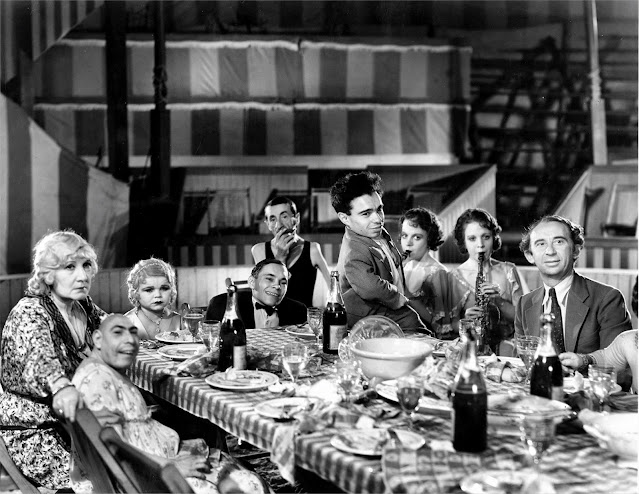
Freaks (1932)

Image
  Tod Browning's "Freaks" At the age of 16, Tod Browning ran away from his well-to-do family to join a traveling circus. All throughout his life, Browning was interested in the more unusual aspects of humanity. He was fascinated with the grotesque, the weird, and the 'horrific.' He spent 13 years in the circus performing many functions, including a roustabout, a song-and-dance performer, and a contortionist. When he was 29, he transitioned into acting and eventually directing. As a director, he carried this fascination for the unusual with him, often taking on projects that were deemed 'unusual' or 'abnormal.' His greatest silent film, 1927's " The Unknown " reflected this fully. It portrayed a thief in a traveling circus pretending to be armless to hide from police, only to cut off his arms to pursue the woman he loved. It was a film that personified Browning's interests and personality. However, five years later, he would releas...

Dracula (1931)

Image
  Tod Browning's "Dracula" In the new sound era of film at the start of the 1930s, Universal Studios attracted many Depression-era audiences to the thrills of the 'horror' genre. Films like " Frankenstein ," " The Invisible Man ," and " The Bride of Frankenstein " all had great success with audiences wanting a thrilling escape from the stress and uncertainty of modern life. The film that started this trend was Tod Browning's 1931 film " Dracula. " The original source material, Bram Stoker's 1897 novel of the same name, had already been adapted to the stage by Hamilton Deane and John L. Balderston in 1927. The success of the stage play is what ignited the interest in turning the story into a full-length feature film. Universal Studios even hired the actor playing Dracula in the play version, Bela Lugosi, who would forever be iconic for portraying the vampire. There had been one other instance of Stoker's novel bei...

The Unknown (1927)

Image
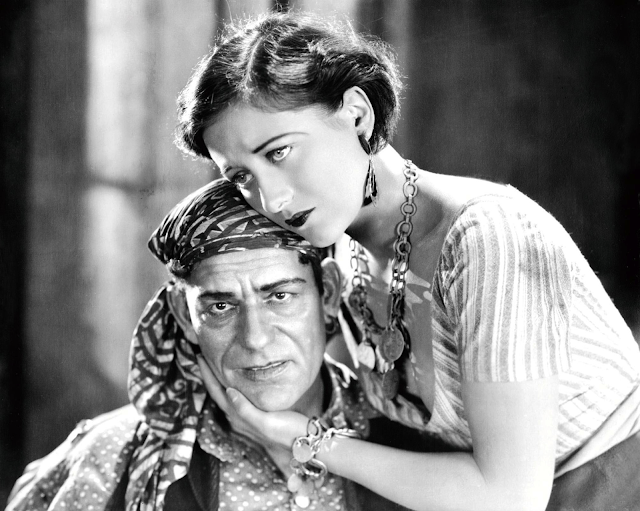
  Tod Browning's "The Unknown" At the age of 16, Tod Browning ran away from his wealthy family to join the circus. His fascination with carnival life stemmed from his obsession with the strange, grotesque, and unique oddities found on the outskirts of modern society. When he became a filmmaker, he brought his fascinations along with him. His films often deal with the unflattering aspects of humanity that we tend to hide away. The most famous film in his catalog of silent features, " The Unknown ," is no exception. " The Unknown " follows "Alonzo the Armless," played by Lon Chaney, who throws knives with his feet at a traveling circus. What is revealed to the viewer, however, is that Alonzo is actually hiding his arms in his torso as a means of evading capture for his various crimes. While at the circus, he falls in love with a young woman named Nanon, played by Joan Crawford in one of her very first roles. He goes to drastic measures to secur...

The Ox-Bow Incident (1943)

Image
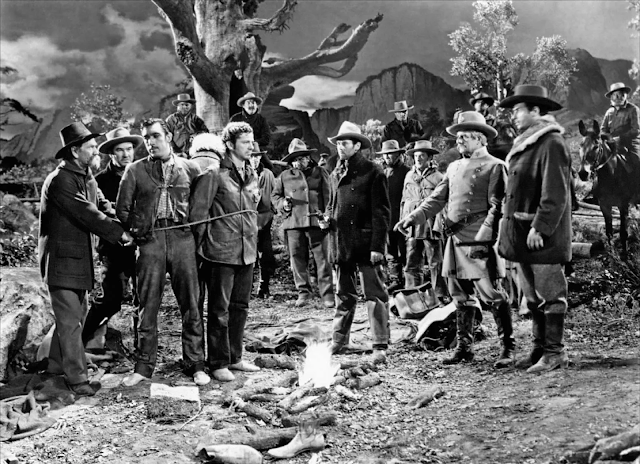
  William A. Wellman's "The Ox-Bow Incident" After director William A. Wellman read Water Van Tilburg Clark's 1940 novel " The Ox-Bow Incident ," he wanted to adapt it into a film. The story of the novel and film was relatively simple. A group of townspeople in 1885 Nevada track down men they believe to be cattle rustlers who recently murdered a rancher. Rather than bring them back for trial, the townspeople want to have them hanged immediately. After the hanging, it is discovered that the three men were actually innocent. The film depicts how far mob mentality can go. 

Nothing Sacred (1937)

Image
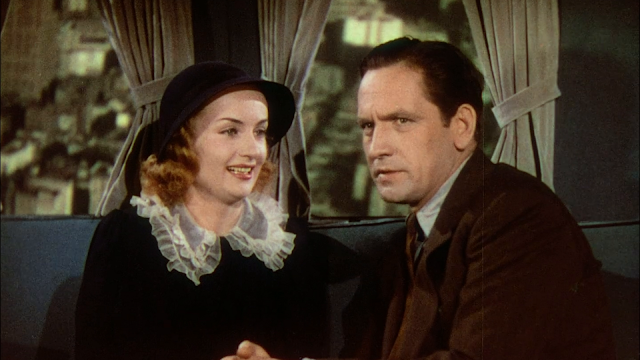
  William A. Wellman's "Nothing Sacred" After the major success of " A Star is Born ," producer David O. Selznick instantly rolled out another technicolor project with director William A. Wellman. Instead of a prestige drama like " A Star is Born ," Selznick opted for a screwball comedy, as they were becoming box office successes in the mid to late 1930s. In fact, it was to be the first screwball comedy filmed in technicolor. Legendary scriptwriter Ben Hecht penned the screenplay while spending two weeks on a train. The film, " Nothing Sacred ," is centered on a woman lying about an incurable illness and getting a free trip to New York City on the dime of an exploitative newspaper. Fredric March, who starred in " A Star is Born ," was brought back again to work with Selznick and Wellman. There were even intentions to bring back Janet Gaynor, as well. However, after Wellman met Carole Lombard, he convinced Selznick to cast her as the...

A Star is Born (1937)

Image
  William A. Wellman's "A Star is Born" Adapted several times over the last 80 years, " A Star is Born " demonstrated the fickle nature of fame, success, and industry. Written by Dorothy Parker, Alan Campbell, and Robert Carson, the film follows a young up-and-coming star as she rises to the heights of Hollywood stardom, while her alcoholic movie star husband begins to slide down the ladder of obscurity. Many thought the plot of the film closely resembled the careers and relationships between Barbara Stanwyck and Frank Fay. However, this has never actually been confirmed. The film was also one of the first major Hollywood technicolor films that was considered both a critical and commercial success. The film seemed to be a starting point for the kinds of films that producer David O. Selznick would be making for the next several decades. After the wild success of " A Star is Born ," David went on to produce large, epic, technicolor box office smashes lik...